
insights
by constantine
Short insights from Constantine that you can put immediately into action for yourself, your organisation and your people.
Power of Curiosity
Curiosity and Resilience
• A curious mind juxtaposes a judgemental and closed mind
• It is about courageously being open to discover what we don’t that we don’t know, seeking out new experiences, knowledge and feedback while remaining open to change
• Although we work with clients on inclusivity and diversity, it is curiosity precedes that precedes this and generates an environment of psychological safety for others
The Benefits
1. Healthier Relationships – supports healthy conflict through open discussion, and the understanding of deeper values, needs and fears of others
2. Constant Personal Development versus Expertise - our knowledge can become obsolete quickly. Curiosity ensures we are fully present, remaining consciously aware of our environment and reduce the risk of becoming unconsciously competent, which, by the way is when accidents happen!
3. Innovation Through Unorthodox Thinking. By unlearning, challenging ourselves and our biases, and simply asking more questions of people we normally wouldn’t, we look at the world in a different way.
4. We become more self-aware and attractive to others.
Start with one question. “Who am I being in this moment / in this interaction, right now and what is the impact on the present?”
Coaching Conversations with Srividya Nagaraju and Constantine PappasShow More

Power of Curiosity
One of the reasons why young children are willing to take risks and be more creative and resilient before they turn into us is that they look to the world through a curious and open mind. (Rawding, S., 2018). We can relearn this as adults.
Curiosity and Resilience
• A curious mind juxtaposes a judgemental and closed mind
• It is about courageously being open to discover what we don’t that we don’t know, seeking out new experiences, knowledge and feedback while remaining open to change
• Although we work with clients on inclusivity and diversity, it is curiosity precedes that precedes this and generates an environment of psychological safety for others
The Benefits
1. Healthier Relationships – supports healthy conflict through open discussion, and the understanding of deeper values, needs and fears of others
2. Constant Personal Development versus Expertise - our knowledge can become obsolete quickly. Curiosity ensures we are fully present, remaining consciously aware of our environment and reduce the risk of becoming unconsciously competent, which, by the way is when accidents happen!
3. Innovation Through Unorthodox Thinking. By unlearning, challenging ourselves and our biases, and simply asking more questions of people we normally wouldn’t, we look at the world in a different way.
4. We become more self-aware and attractive to others.
Start with one question. “Who am I being in this moment / in this interaction, right now and what is the impact on the present?”
Coaching Conversations with Srividya Nagaraju and Constantine Pappas
Curiosity and Resilience
• A curious mind juxtaposes a judgemental and closed mind
• It is about courageously being open to discover what we don’t that we don’t know, seeking out new experiences, knowledge and feedback while remaining open to change
• Although we work with clients on inclusivity and diversity, it is curiosity precedes that precedes this and generates an environment of psychological safety for others
The Benefits
1. Healthier Relationships – supports healthy conflict through open discussion, and the understanding of deeper values, needs and fears of others
2. Constant Personal Development versus Expertise - our knowledge can become obsolete quickly. Curiosity ensures we are fully present, remaining consciously aware of our environment and reduce the risk of becoming unconsciously competent, which, by the way is when accidents happen!
3. Innovation Through Unorthodox Thinking. By unlearning, challenging ourselves and our biases, and simply asking more questions of people we normally wouldn’t, we look at the world in a different way.
4. We become more self-aware and attractive to others.
Start with one question. “Who am I being in this moment / in this interaction, right now and what is the impact on the present?”
Coaching Conversations with Srividya Nagaraju and Constantine Pappas

MY INNER NARRATIVE
We all have a voice in our heads and if broadcast this workshop out loud, we’d probably be locked up.
When we are unaware of this cacophony, it owns us.
One underscoring principle:
Asking yourself if you are being curious (open minded) or judgemental (closed). When we judge others negatively, we unconsciously become harder on ourselves … and it becomes a painful loop.
Five insights:
1. Above all, “who am I being?” To the above point, am I truly present and open minded?
2. Acknowledge and be curious about the thoughts / story. Notice them and ride them like a wave. Write them down.
a. Disassociate self from the narrative: For example, instead of “I am a fraud”, replace it with, “I notice my mind saying that I am a fraud.”
b. Then, consider how the negative narrative has actually benefited you in your life, shifting your relationship with it. Even give it a name (mine is a ‘red bat’)!
3. Where is the evidence – what would you tell a friend? hat you are of?
4. Vocalise it with others you trust – not seek to solve but to share / vent.
5. What one specific action, step or task can I focus on?
When we are unaware of this cacophony, it owns us.
One underscoring principle:
Asking yourself if you are being curious (open minded) or judgemental (closed). When we judge others negatively, we unconsciously become harder on ourselves … and it becomes a painful loop.
Five insights:
1. Above all, “who am I being?” To the above point, am I truly present and open minded?
2. Acknowledge and be curious about the thoughts / story. Notice them and ride them like a wave. Write them down.
a. Disassociate self from the narrative: For example, instead of “I am a fraud”, replace it with, “I notice my mind saying that I am a fraud.”
b. Then, consider how the negative narrative has actually benefited you in your life, shifting your relationship with it. Even give it a name (mine is a ‘red bat’)!
3. Where is the evidence – what would you tell a friend? hat you are of?
4. Vocalise it with others you trust – not seek to solve but to share / vent.
5. What one specific action, step or task can I focus on?

UNTANGLING ANXIETY
Our minds go wondering approximately 47% of the time (Killingsworth & Gilbert, 2010). This means we may not be truly living in the present for almost half of our lives; we may be dwelling on the past or thinking about the future.
Justin Brewer (2021) describes anxiety as a learned habit; A feeling of nervousness, or worry, or unease about an imminent event or something with an uncertain outcome. There is often a trigger, a behaviour and a result or payoff.
Worry and anxiety can therefore form an unconscious habit loop:
1. The trigger being an individual event or memory
2. A behaviour, which could come in the form of a racing heart or dwelling on “what ifs” and,
3. The payoff being a sense of, “Well, at least by worrying I am doing something”, mistakenly collapsing worrying with problem solving.
So, how do we start untangling anxiety?
First, remember that there is always a healthy level of fear / worry to be had. We just do not want to over index on negative narratives.
1. Acknowledge the feeling (both mental and physical) without judging it. Listen to your body
2. Think about where you are / what is going on around you, reflecting on ‘trigger themes’
3. Consider what the payoff and / or reward you are receiving from this
4. Critically, reduce the ‘mental fog’ by writing the above down and sharing it with someone you trust
5. Focus on your circle of influence – what is within your control and focus on taking a small step. One action.
Justin Brewer (2021) describes anxiety as a learned habit; A feeling of nervousness, or worry, or unease about an imminent event or something with an uncertain outcome. There is often a trigger, a behaviour and a result or payoff.
Worry and anxiety can therefore form an unconscious habit loop:
1. The trigger being an individual event or memory
2. A behaviour, which could come in the form of a racing heart or dwelling on “what ifs” and,
3. The payoff being a sense of, “Well, at least by worrying I am doing something”, mistakenly collapsing worrying with problem solving.
So, how do we start untangling anxiety?
First, remember that there is always a healthy level of fear / worry to be had. We just do not want to over index on negative narratives.
1. Acknowledge the feeling (both mental and physical) without judging it. Listen to your body
2. Think about where you are / what is going on around you, reflecting on ‘trigger themes’
3. Consider what the payoff and / or reward you are receiving from this
4. Critically, reduce the ‘mental fog’ by writing the above down and sharing it with someone you trust
5. Focus on your circle of influence – what is within your control and focus on taking a small step. One action.
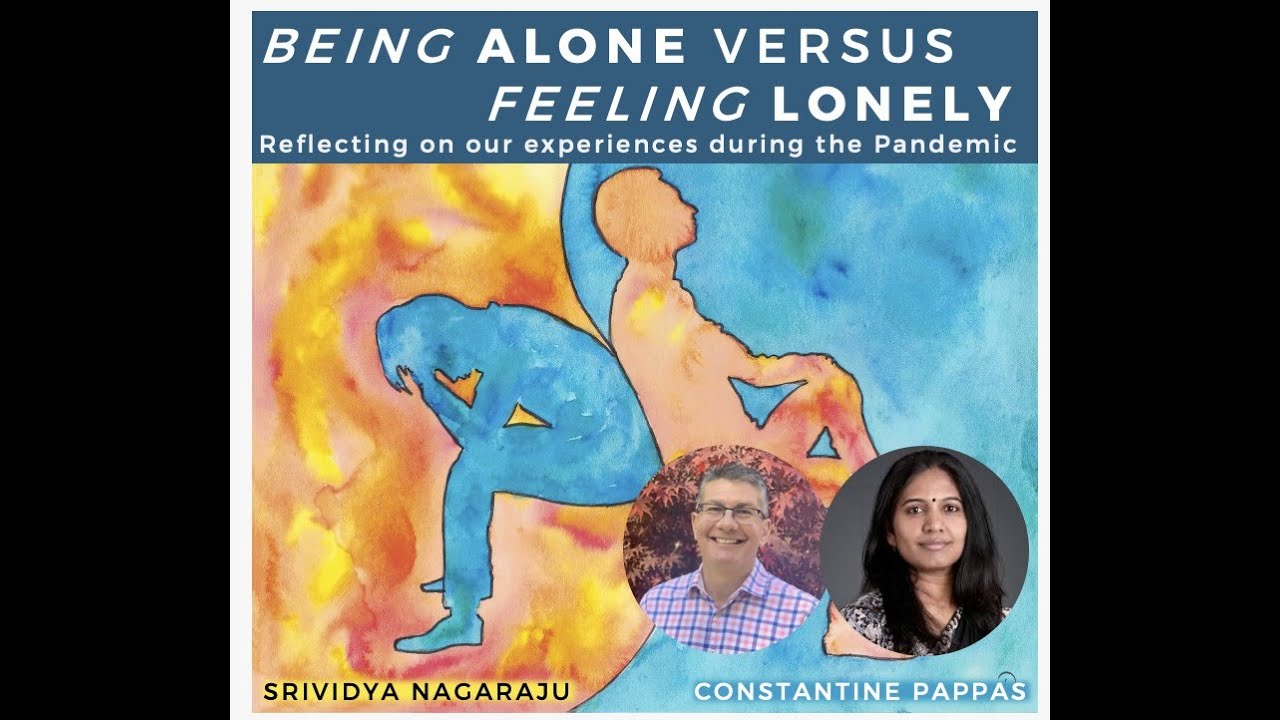
BEING ALONE VERSUS FEELING LONELY
Being content with yourself in an alone state is one of the greatest, most versatile superpowers out there! It improves our relationship with others by reflecting on, appreciating, and building on what makes us uniquely distinctive. It helps us slow down, disrupt habitual and reactive patterns of thought, and notice things from a new perspective (Leavitt, Butzer, Clarke & Dvorakova, 2021).
Four proven benefits of Having Me Time
1. Builds esteem, empathy, and confidence with self, becoming less reliant on what may become “reassurance addiction”
2. As a result of the first point, we become aware that comparison is a fallacy. We lessen develop greater peace with our situation and fully accepting who we are and who we are not. In addition, fully accepting what we have, and we do not have
3. Builds courage in practicing being with our inner narrative and not judging it – or diving into a negative rumination spiral
4. Finally, in boosts our memory and concentration because we have the opportunity to cognitively dive deep, focus and unleash our creativity.
3 Tips to Being Content with Being Alone with You
There are 3 ways, but it does start with shifting our mindset to valuing solitude. As always, it is critical to always vent with someone we trust.
1. Listen to yourself, without buying into a negative narrative and ruminating. Take time to meditate, breathe or as I do, sometimes just laugh at myself!
2. Focus on and be aware our senses right here and right now; sounds, smells, etc. wherever we are in this moment
Cultivate a strength and passion. For example, I love playing the piano alone.
Four proven benefits of Having Me Time
1. Builds esteem, empathy, and confidence with self, becoming less reliant on what may become “reassurance addiction”
2. As a result of the first point, we become aware that comparison is a fallacy. We lessen develop greater peace with our situation and fully accepting who we are and who we are not. In addition, fully accepting what we have, and we do not have
3. Builds courage in practicing being with our inner narrative and not judging it – or diving into a negative rumination spiral
4. Finally, in boosts our memory and concentration because we have the opportunity to cognitively dive deep, focus and unleash our creativity.
3 Tips to Being Content with Being Alone with You
There are 3 ways, but it does start with shifting our mindset to valuing solitude. As always, it is critical to always vent with someone we trust.
1. Listen to yourself, without buying into a negative narrative and ruminating. Take time to meditate, breathe or as I do, sometimes just laugh at myself!
2. Focus on and be aware our senses right here and right now; sounds, smells, etc. wherever we are in this moment
Cultivate a strength and passion. For example, I love playing the piano alone.

BUILDING EMOTIONAL LITERACY BY OWNING OUR FEELINGS. EP 2: Thought Diffusion
1. NOT suppressing our feelings
2. Articulate them – write them down and say them out loud
3. Ask yourself, “would I say that to a friend???”
4. Disassociate: instead of how you say them as you did in step 2, say the same feelings out loud starting with, “I notice my mind say that I am (feeling) ....
2. Articulate them – write them down and say them out loud
3. Ask yourself, “would I say that to a friend???”
4. Disassociate: instead of how you say them as you did in step 2, say the same feelings out loud starting with, “I notice my mind say that I am (feeling) ....

Build Emotional Literacy by Owning Your Feelings. PT 1: MENTAL DISASSOCIATION
How we bypass feelings:
1. Suppressing by pushing down and aside
2. Escaping through mind numbing activity
3. Acting on it by dumping on others, such as sending a reactive email.
1. Recognise our thought
2. "De-collapsing" 'what happened' from 'our story'
3. Do I have evidence that supports my story?
4. Ask yourself, "what is the worst case scenario?"
1. Suppressing by pushing down and aside
2. Escaping through mind numbing activity
3. Acting on it by dumping on others, such as sending a reactive email.
1. Recognise our thought
2. "De-collapsing" 'what happened' from 'our story'
3. Do I have evidence that supports my story?
4. Ask yourself, "what is the worst case scenario?"

ROMANCING SUCCESS: Episode 3.1: HOLISTIC GOAL SETTING: “How is your wheel of life?”
Start reviewing your own “Wheel of Life” with us. Considerations:
1. Define each distinction based on what is important to you
2. Rate and reflect without judgement
3. Start considering up to 2 – 3 goals. IMPORTANT: Do not neglect on building your strengths!
1. Define each distinction based on what is important to you
2. Rate and reflect without judgement
3. Start considering up to 2 – 3 goals. IMPORTANT: Do not neglect on building your strengths!

Romancing Success Ep. 2: Purpose
2020 provided us with a unique shared human experience. A time for reflection and recalibration. As we progress into the New Year, we have an opportunity focus in on our purpose and live with greater intentionality.
Three steps to defining your purpose:
1. PASSION - What are you passionate about? When you are most energised, what is present? How can you create more of these moments?
2. COMPETENCE – What makes you distinctive? What are your strengths and how can you better leverage them?
3. WORLD NEEDS – What do the human beings around you need from you now?
Three steps to defining your purpose:
1. PASSION - What are you passionate about? When you are most energised, what is present? How can you create more of these moments?
2. COMPETENCE – What makes you distinctive? What are your strengths and how can you better leverage them?
3. WORLD NEEDS – What do the human beings around you need from you now?

Romancing Success Ep1: “Embracing who you are”
A 5-episode video series, with Srividya and Constantine coaching you through 5 core steps to developing meaningful goals.
1. Embracing who you are
2. Defining your purpose
3. Goals: Wheel of life
4. Galvanising your mindset
5. Rewarding habits.
1. Embracing who you are
2. Defining your purpose
3. Goals: Wheel of life
4. Galvanising your mindset
5. Rewarding habits.

ROMANCING SUCCESS: HOLISTIC GOAL SETTING
This is an introductory video intended to coach you through 5 core steps to developing a routines-based goal setting process.
1. Embracing who you are
2. Defining your purpose
3. Goals: Wheel of life
4. Galvanising your mindset
5. Rewarding habits.
In Episode 1 on 20 January, join us in refining your own “Embracing who you are”.
Follow us on Instagram @peoplepriorityROMANCING SUCCESS: HOLISTIC GOAL SETTING
This is an introductory video intended to coach you through 5 core steps to developing a routines-based goal setting process.
1. Embracing who you are
2. Defining your purpose
3. Goals: Wheel of life
4. Galvanising your mindset
5. Rewarding habits.
In Episode 1 on 20 January, join us in refining your own “Embracing who you are”.
Follow us on Instagram @peoplepriority
1. Embracing who you are
2. Defining your purpose
3. Goals: Wheel of life
4. Galvanising your mindset
5. Rewarding habits.
In Episode 1 on 20 January, join us in refining your own “Embracing who you are”.
Follow us on Instagram @peoplepriorityROMANCING SUCCESS: HOLISTIC GOAL SETTING
This is an introductory video intended to coach you through 5 core steps to developing a routines-based goal setting process.
1. Embracing who you are
2. Defining your purpose
3. Goals: Wheel of life
4. Galvanising your mindset
5. Rewarding habits.
In Episode 1 on 20 January, join us in refining your own “Embracing who you are”.
Follow us on Instagram @peoplepriority

3 INGREDIENTS TO BUILDING RESILIENCE
1. Mindset:
1.1 Noticing negative thoughts without judgement.
1.2 Practicing thought disassociation. For example, if the negative thought is “I will fail” is to disassociate by saying, “I notice my mind saying to me that I will fail which is not fact based.”
2. Focus:
2.1 Anchoring to my core values and living them.
2.2 Focusing on what I can influence instead of being frustrated on what I cannot.
3. Action:
3.1 One small step – just do something. For example, make the phone call, or start the difficult conversation.
3.2 Create a peer-coaching situation to hold each other to account.
1.1 Noticing negative thoughts without judgement.
1.2 Practicing thought disassociation. For example, if the negative thought is “I will fail” is to disassociate by saying, “I notice my mind saying to me that I will fail which is not fact based.”
2. Focus:
2.1 Anchoring to my core values and living them.
2.2 Focusing on what I can influence instead of being frustrated on what I cannot.
3. Action:
3.1 One small step – just do something. For example, make the phone call, or start the difficult conversation.
3.2 Create a peer-coaching situation to hold each other to account.

THE MINDFUL LEADER
The most effective leaders take mindfulness seriously in 2 steps:
1. Self-awareness:
1.1 Being aware of their feelings and senses
1.2 Not judging or making assumptions about those feelings – just noticing them.
2. Awareness of others:
2.1 How they are “being”
2.2 Being intentionally present with those around them
2.3 Leaving a positive impact with those they interact with.
1. Self-awareness:
1.1 Being aware of their feelings and senses
1.2 Not judging or making assumptions about those feelings – just noticing them.
2. Awareness of others:
2.1 How they are “being”
2.2 Being intentionally present with those around them
2.3 Leaving a positive impact with those they interact with.
1
of 3